

Language Arts, Family Style: How We Use Read Aloud Revival in Our Homeschool
Before I share how we use one of our favorite resources, I want to take a moment to consider what Language Arts— or English Language Arts— is:
“The study is often referred to as English Language Arts (ELA) and includes traditional school subjects such as spelling, literature, grammar, and composition.
Its primary purpose is to equip individuals with the tools to effectively express their own ideas while interpreting and analyzing the thoughts and information of others through various forms of media and text.”
I really appreciate this definition because it gives a clear understanding of the subject and its broader purpose. Language arts is not just about memorizing spelling rules, learning vocabulary, or checking off worksheets. It’s about helping your child absorb ideas from well-written books and then express their own thoughts in response.
To become strong writers, kids need to develop the ability to ask good questions, think deeply, connect with meaningful ideas, and communicate those ideas effectively. So much of that begins with reading excellent books aloud and discussing them together as a family! Pretty amazing, isn’t it?
Each month, we read the featured picture book with the primary goal of building meaningful and lasting connections with our kids, through books.
Here are the four ways that Read Aloud Revival Premium Bookclubs support this:
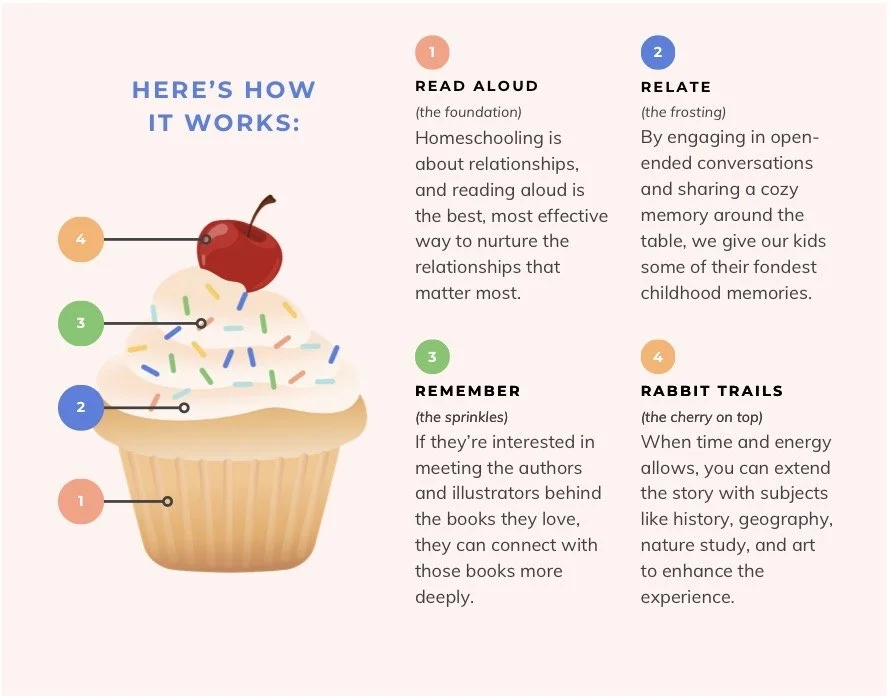
The Rabbit Trails guide is where you’ll find the language arts concepts, along with enriching extras like history, geography, and poetry, depending on the book.
I LOVE integrating this guide into our routine throughout the month. While the language arts concepts are designed for ages 6-12, I use it with all of my boys, ages 15, 14, 13 and 8. The best part is that skills are taught in the context of excellent, enjoyable books rather than through dry worksheets.
I often supplement with additional writing resources, dictionaries and thesauruses to extend the learning for my older sons. Through RAR Book Clubs they write , revise, and apply so many skills in a meaningful context.
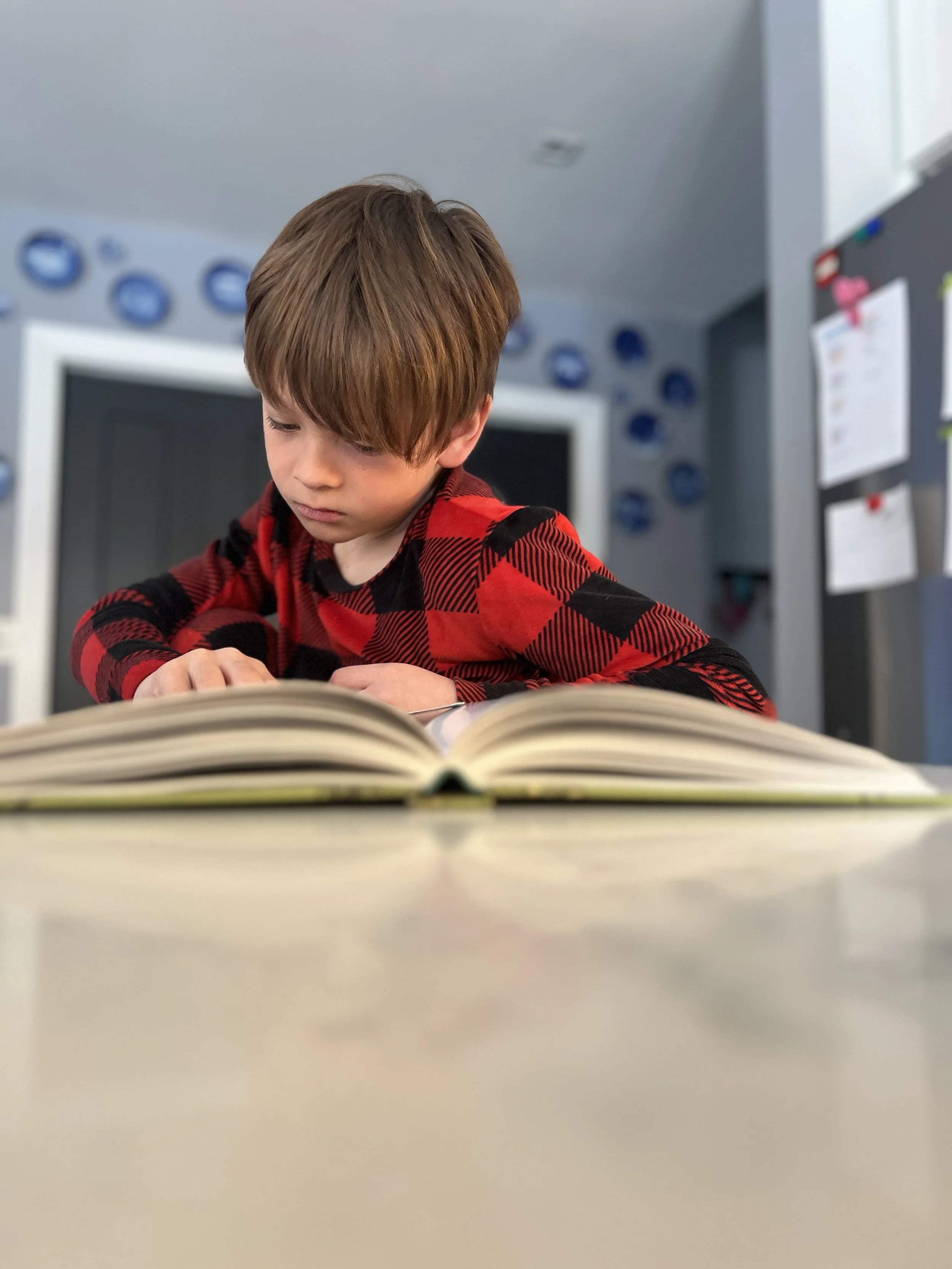
This approach to ELA in our homeschool is both bookish and relaxed. In the past, we used The Good and the Beautiful, but it simply wasn’t the right fit for my boys. It felt too dry and drawn out. Instead, we’ve chosen to make reading great books part of our family culture and to build skills out of the language and ideas we notice along the way.
I map out our focus points week by week in my favorite planner, but we always allow margin to slow down or speed up as needed.
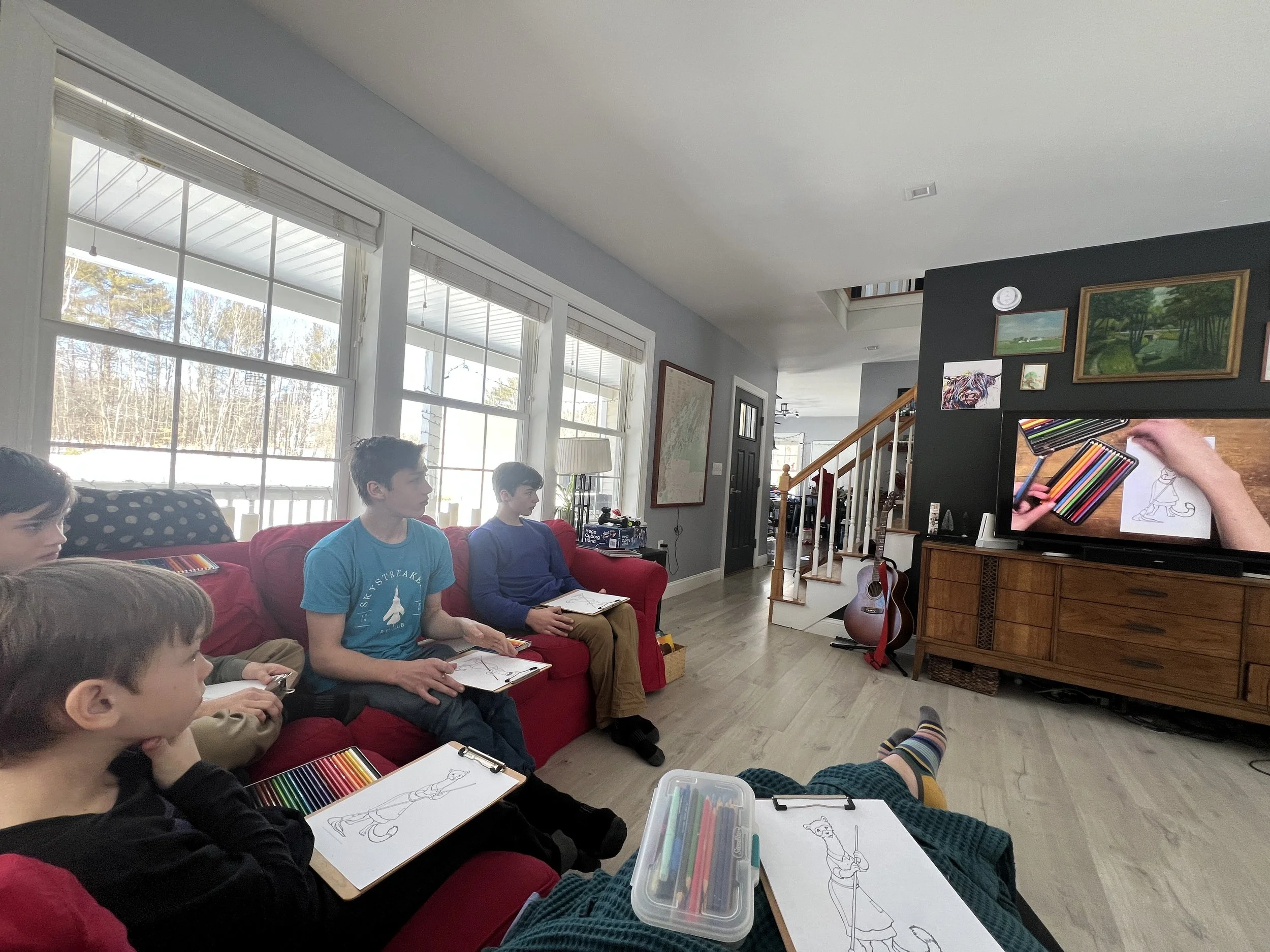
Watching a meet the illustrator art tutorial from Astrid Sheckels
Some concepts we have learned through RAR Book Clubs include:
Reading Comprehension & Literary Analysis
Identifying theme and central message
Analyzing character development and motivation
Understanding plot structure (conflict, climax, resolution)
Recognizing setting and its impact on story
Making predictions and drawing conclusions
Comparing and contrasting characters, events, or texts
Identifying an author’s purpose and perspective
Literary Elements & Devices
Symbolism
Foreshadowing
Imagery
Mood and tone
Point of view
Figurative language (simile, metaphor, personification)
Irony (when appropriate for age and text)
Narrative voice
Vocabulary Development
Context clues
Rich living language exposure
Word study and nuanced word meanings
Discussion of powerful or unusual word choices
Opportunities to incorporate new vocabulary into speech and writing
Oral Language & Discussion Skills
Narration (both oral and written)
Socratic-style discussion
Listening comprehension
Articulating opinions
Asking thoughtful questions
Engaging in respectful literary conversation
Writing Skills
Narration and retelling
Response writing
Creative writing inspired by the text
Literary analysis paragraphs
Personal reflection
Copywork and dictation
Writing from another character’s perspective
Comparing books to life, history, or other literature
Grammar & Mechanics (Indirectly)
These are usually taught in context to the book we are reading vs. through drills:
Sentence structure awareness
Punctuation through copywork and modeled writing
Grammar patterns through excellent literature
Style and syntax imitation
Advanced Thinking Skills
Evaluating character choices
Analyzing moral dilemmas
Connecting literature to history, art, and life
Recognizing archetypes and recurring story patterns
Additional Enrichment Often Included
Author and illustrator study
Genre study
Book-to-book connections ( I mean RAR is known for lovely book lists)
Cross-curricular links (history, geography, art)
Illustration analysis and visual literacy
As you can see, Read Aloud Revival Family Book Clubs offer a rich and layered approach to English Language Arts. They have brought so much delight to our homeschool. And I’ll say this— my teenagers have developed remarkably strong writing skills, all without a formal grammar curriculum. That is the power of living books, discussion, and meaningful practice.